


Education
There is a renewed vigor from central government to improve the educational environment for the future generation. Opportunity is being driven through fund allocation and framework delivery of new and refurbished school projects. As part of the BSF programme and free school opportunities Bradshaw Gass & Hope LL delivered new school buildings under the rigorous CABE design standards and with full compliance to schools Building Bulletin guidance documents. We are continuing to deliver new builds and existing school refurbishments and extensions to a number of local authorities as well as individual Academy Trusts and Higher Eduction Colleges.
featured Education Projects
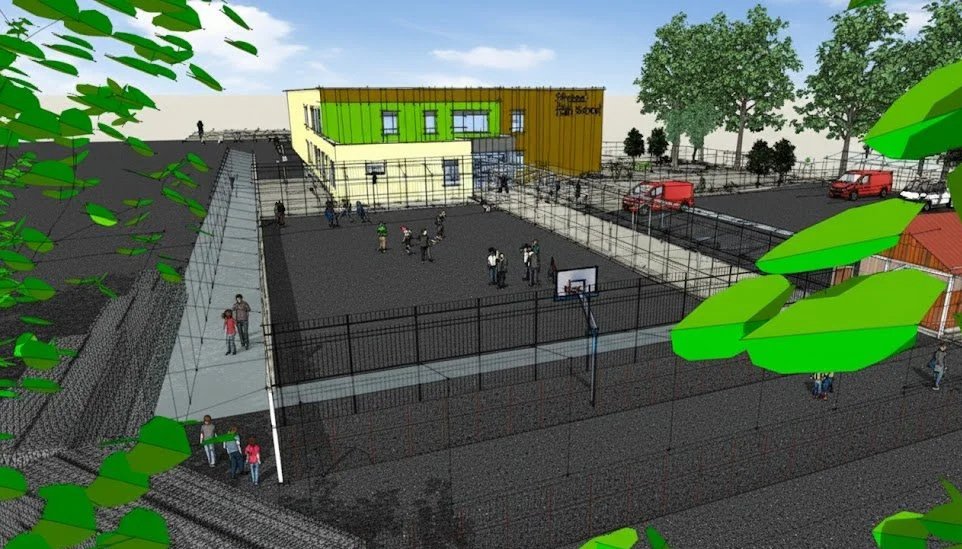
Firwood SEN High School
The Woodbridge Trust
£4m extension to existing school
Firwood School provides specialist education for students aged 11–19 with complex special educational needs and disabilities (SEND) and is physically linked to Bolton St Catherine’s Academy. The development proposal strengthens Firwood School’s identity through a clearly defined, independent entrance, while responding to the nationally recognised and locally evidenced need for additional high-quality SEND places in line with government policy.
Designed in accordance with the Department for Education’s Building Bulletin 102: Designing for Disabled Children and Children with Special Educational Needs, the project prioritises inclusive design, accessibility, clear circulation and dignified personal care provision.
The project comprises a two storey extension to the existing high school, providing six purpose-built classrooms, together with internal alterations to improve connectivity and legibility. The extension introduces a welcoming entrance with secure, canopied drop-off areas, a new reception and administration hub, and three classrooms on each floor. Each classroom includes ceiling-mounted hoists and access to specialist hygiene suites. Wider site improvements include enhanced circulation, parking, external play areas, lighting and drainage.

Marsden Heights Community College
Lancashire County Council
£20m new build on greenfield site
Bradshaw Gass and Hope was selected as one of the Architectural Designers for the Bovis Lend Lease Team in the BSF Wave 1 programme for Lancashire County Council. BG & H have responsibility for designing 2 of the 9 new schools in the programme; Marsden Heights Community College being a new building for 1050 pupils in an 11-16 secondary school in Nelson, Lancashire and the other being a BESD 40-place special school in Burnley, Lancashire
The Marsden Heights scheme involves articulating the philosophy of BSF (Building Schools for the Future) with overall acknowledgement of the expectations of BB98 and stringent requirements for BREEAM Very Good Accreditation. The planning of the building was developed through careful consideration for proximity of faculties, natural ventilation, central control and aspirations for transformational education on a site with topographical and planning constraints. The building is arranged over 4 levels in a compact footprint to allow a maximisation of external curriculum spaces and quality of setting in a location surrounded by residential development but with stunning views over Pendle Hill. Construction design utilises pre-fabricated elements and re-locatable partitioning in order to reduce the site programme and incorporate flexibility and adaptability in-use. The project started on site in May 2008 and is to be completed ready for September 2009 occupation.
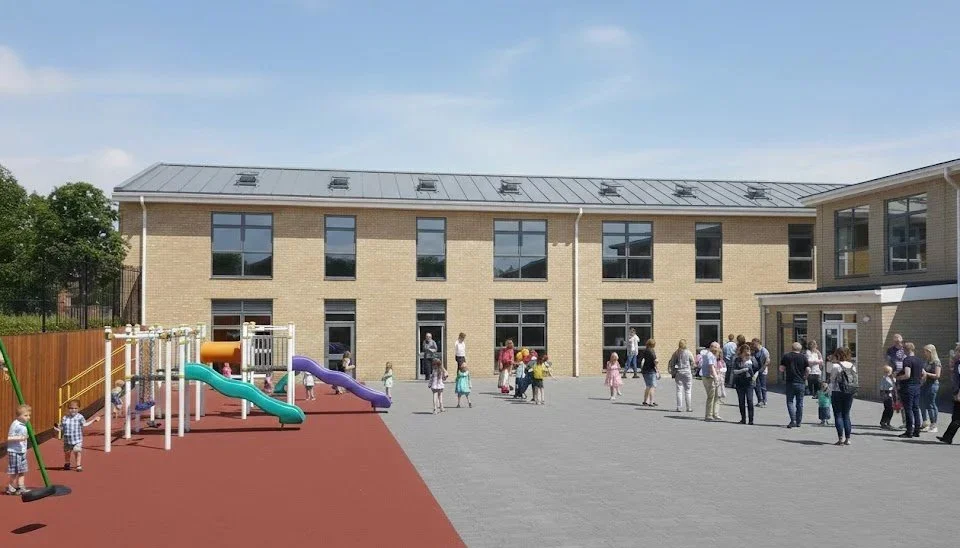
Ladywood SEN Primary School
The Woodbridge Trust
£4.5m extension to existing primary school
Ladywood School provides specialist education for pupils aged 4–11 with a wide range of complex special educational needs and disabilities (SEND). The school is co-located with Masefield Primary School in Little Lever, Bolton, sharing access, parking and external soft play areas, while operating independently in terms of curriculum and facilities.
The proposed scheme responds to the growing demand for SEND places and was developed in accordance with DfE Building Bulletin 102: Designing for Disabled Children and Children with Special Educational Needs. The project comprises a two storey extension providing 12 new classroom bases, together with internal alterations to improve connectivity, visitor access and overall functionality. A new staffroom is included to enhance staff well-being and support effective service delivery, alongside ancillary welfare accommodation and assisted access shower and toilet facilities to support pupils’ complex needs. To facilitate development two existing modular buildings had to be demolished.
Externally, the scheme includes the relocation of the existing car park and the creation of new formal external play areas to serve the extended accommodation. The works will be undertaken on a constrained operational site, requiring robust safeguarding measures, clear separation and close coordination with school management.

The Rose BESD School
Lancashire County Council
£8m new build on brownfield site
Bradshaw Gass and Hope LLP were selected as one of the Architectural Designers for the Catalyst Consortium in the BSF Wave 1 programme for Lancashire CC. In addition to The Rose School, a 450 place BESD special school in Burnley, Lancashire the Practice has also been appointed to design and manage the provision of a 1050 place secondary school.
The Rose School represents an approach by Lancashire County Council to ensure that the ‘Every Child Matters’ agenda for schools is implemented effectively for all students at every level by providing a specialist learning environment for students with very difficult issues to overcome to allow effective learning.
The School deals with pupils with behavioural, emotional and social difficulties which range from those with ADHD to those with severe emotional and psychology issues.
The school provides accommodation consistent with the requirements for the DfES Bulletins. It provides a robust environment, with careful selection of materials and the design of easily managed spaces whilst still maintaining a welcoming, exciting and safe environment with pupil well-being at its centre.
Seamless integration of ITC within a multitude of leaning spaces, not just classroom, enables pupils to have a choice of environment for learning.
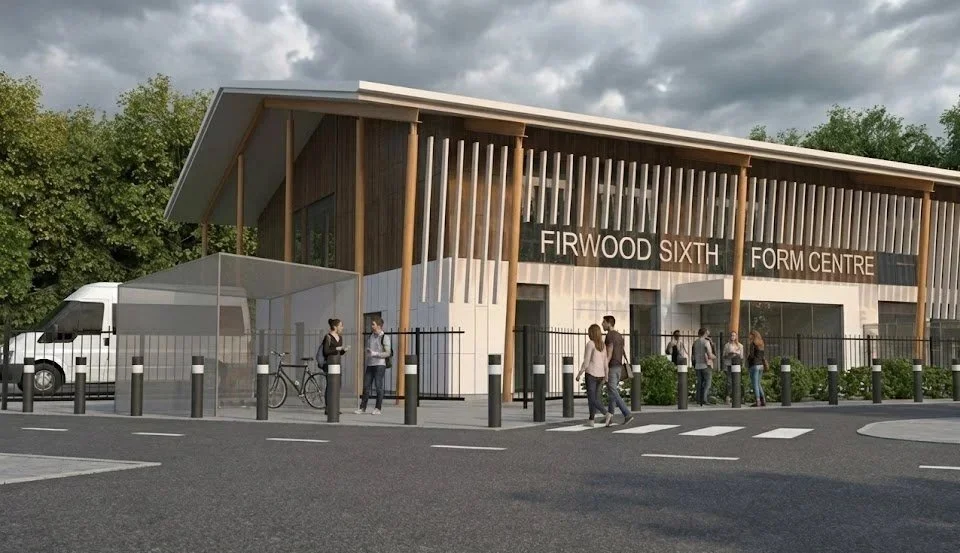
Firwood SEN 6th Form College
The Woodbridge Trust
£11.5m new build on greenfield site
The proposal comprises a new purpose-built Sixth Form Special Educational Needs (SEN) facility on vacant land adjacent to the Jubilee Community Centre off Crompton Way, Bolton. The development responds to an identified shortfall in Post-16 SEN provision and will accommodate up to 100 students, supporting local authority and government objectives to increase specialist educational capacity.
The facility will be operated by The Woodbridge Trust, providing a clear progression route from its existing 11–16 SEN high school in Harwood. The proposal has been informed by SEN design guidance, including DfE Building Bulletin 102, with a strong emphasis on accessibility, well-being and independence.
Internally, the building provides flexible teaching and support spaces within a calm, high-quality environment to support students transitioning into Post-16 education. Social spaces are light and welcoming, positioned for passive supervision. Circulation routes are generously sized to accommodate powered wheelchairs, with enhanced widths in high-use areas.
Teaching spaces have strong visual links to landscaped external areas, with ground-floor classrooms opening onto inclusive outdoor spill-out spaces. The scheme incorporates energy-efficient design measures that exceed Building Regulations, delivering a sustainable and cost-effective solution.

The Kentigern Building
Holy Cross 6th Form College
£4.5m new build on brownfield site
The Kentigern Building is a new 1,500 sqm teaching block designed to support the continued growth of the existing College. The three-storey building is positioned prominently at the corner of Manchester Road and Richmond Street, immediately adjacent to the current campus, reinforcing its urban presence and connectivity. The upper storey is sensitively accommodated within the roof form, reducing visual mass and responding to the surrounding townscape.
The ground floor is arranged around a lightweight, glazed entrance hall that provides a clear and welcoming point of arrival. Teaching, worship and staff facilities are distributed efficiently across all levels, with four classrooms, a chapel and support spaces at ground floor, six classrooms and chapel gallery at first floor, and seven classrooms at second floor.
The building is fully accessible, incorporating two ambulant-disabled staircases and a centrally located lift. Externally, the architectural language facing Manchester Road reflects the established Summerfield Building through matching scale, materials and detailing, including facing brick, slate roofing and artificial stone plinths, cills and window heads, in accordance with Local Authority planning requirements.